
Complete
Project Objectives
Use acoustic tagging technology to provide critical information on spatial and temporal distribution of salmonids to inform salmon management, U.S. Navy activity, and Southern Resident Killer Whale (SRKW) conservation. The study seeks to 1) determine the occurrence and timing of salmonids within the Navy training ranges, 2) describe the influence of environmental covariates on salmonid occurrence; and, 3) describe the occurrence of salmonids in relation to SRKW distribution.
Current
Project Objectives
Conduct systematic line transect survey for marine mammals for density estimates; conduct survey to determine ecotype identity of killer whales; analyze existing and newly collected data for seasonal occurrence, abundance, and density of cetacean
Complete
Project Objectives
Determine the occurrence, movement patterns, and residency patterns of multiple humpback whale Distinct Population Segments within Pacific Ocean Navy Range Complexes
Current
Project Objectives
Develop a North Pacific-wide species distribution model for cetaceans
Current
Project Objectives
Identify species of beaked whales, odontocetes, and baleen whales that occur in the surveyed areas; Monitor marine mammal and sea turtle presence, distribution, and diversity in offshore waters; Develop a better understanding of marine mammal distribution, movement patterns, habitat use, population structure, and abundance; Develop reference library of visually-validated acoustic recordings of marine mammals.
Complete
Project Objectives
Determine the spatial distribution and occurrence of beaked whales, other odontocetes, and baleen whales in offshore areas using bottom-mounted passive acoustic recorders and deep-diving autonomous gliders
Current
Project Objectives
To use a combination of pop-up satellite technology and salmon genetics to provide critical information on Chinook salmon spatial and temporal distribution in the Gulf of Alaska and along the Washington coast to inform salmon management and U.S. Navy training activities. The study seeks to 1) determine the occurrence, timing, and specific run of Chinook salmon through genetics within the Navy training areas; 2) describe the influence of environmental covariates on Chinook salmon occurrence; and 3) improve the understanding of run-specific timing and geographical occurrence of Chinook salmon as the prey of Southern Resident killer whales in Washington.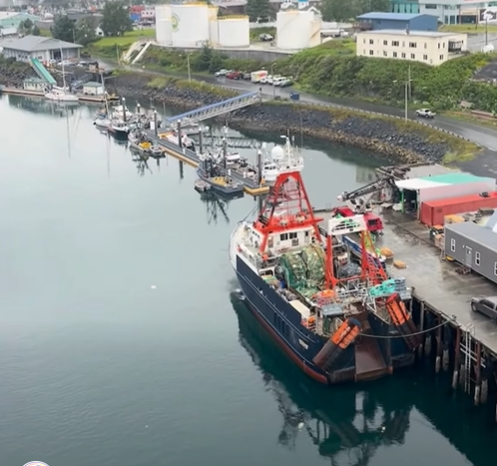
Killer Whale Ecotype Study (KWEST) kicks off
July 27, 2026
Research scientists from the University of Washington and NOAA recently departed from Kodiak, AK aboard the R/V Aquila for a 2-month research cruise focused on distinct groups of killer whales, or…
More details
Collapse details
Date Published:
Filesize:
- March 1, 2020
Status report for the acoustic and visual survey for cetaceans in Behm Canal and Southern Clarence Strait, Alaska, FY22.
- 1,227.95 KB
More details
Collapse details
Date Published:
- June 1, 2013
More details
Collapse details
Date Published:
Filesize:
- January 1, 2024
Three subsurface passive acoustic moorings were deployed in the western Gulf of Alaska on the EcoFOCI fall mooring cruise onboard the F/V Aquila 15 Aug – 14 Sep 2023; recovery is planned for September 2024, funding permitting. These mooring will allow investigation into the seasonal occurrence of many species of vocalizing marine mammals including North Pacific right (NPRW), blue, fin, humpback, minke, gray, sperm, killer, and beaked whales, Dall’s and harbor porpoise, general pinniped sounds, and anthropogenic noise sources such as vessels and seismic airguns. This is important data that the Navy needs to prepare environmental planning documentation, including those for the National Environmental Policy Act (NEPA), Marine Mammal Protection Act (MMPA), and ESA documents and consultations. It is also needed to inform the National Marine Fisheries Service Alaska Regional Office’s NPRW critical habitat expansion decision. In addition to the field work, processing of existing passive acoustic recordings from three moorings in the WGOA is ongoing, with one site (Barnabus Trough) completed for the high-frequency band. Killer whale vocalizations were detected on 214 of the 358 days with recordings.
- 1,129.99 KB
More details
Collapse details
Date Published:
Filesize:
- May 12, 2025
The National Oceanic and Atmospheric Administration (NOAA) Alaska Fisheries Science Center has maintained passive acoustic recorder moorings in areas of interest to the US Navy in the Gulf of Alaska (GOA). Archival data from three of these sites were analyzed for the timing and occurrence of key cetacean species. In addition, three subsurface passive acoustic moorings were deployed for a year (fall 2023 to fall 2024) in areas of mutual interest to NOAA and the Navy. Two of these new moorings, located along the western GOA slope, were redeployed in 2024.
- 2,832.58 KB
Use of Passive Acoustic Monitoring to assess beaked whale distribution and habitat use in the Gulf of Alaska.
Southern California Marine Mammal Workshop 2014 .
More details
Collapse details
Date Published:
Filesize:
- January 31, 2014
Beaked whales are among the most poorly understood marine mammals. They are deep-diving odontocetes, spending most of their time submerged with infrequent, short surface intervals. Due to this behavior, they are difficult to study using visual observation methods alone . However, recent advancements in passive acoustic detection and survey techniques have shown to provide viable methods for stu dying beaked whales (Yack et al. 2013). In the Gulf of Alaska (GOA), there is little known abo ut beaked whale abundance and distribution.
- 1,726.45 KB
Virtual Alaska Marine Science Symposium, 24-27 January 2022 .
More details
Collapse details
Habitats occupied by Chinook salmon in the Gulf of Alaska and in the U.S. Navy’s Temporary Maritime Activities Area..
Alaska Marine Science Symposium, Anchorage, Alaska, January 2023 .
More details
Collapse details
Date Published:
- February 1, 2023
- 198.11 KB
More details
Collapse details
Date Published:
Filesize:
- December 18, 2023
This survey implemented visual line transect and passive acoustic methods to assess the presence and distribution and to estimate density and abundance of cetaceans in Behm Canal and central Clarence Strait.
- 1,093.33 KB
More details
Collapse details
Date Published:
Filesize:
- February 28, 2022
The Pacific Marine Assessment Program for Protected Species (PacMAPPS) survey occurred from 1 August to 26 August 2021, beginning and ending in Kodiak, AK. Over the course of the survey, a total of 2,330 km of on-effort tracklines were surveyed in suitable weather conditions, and a total of 687 sightings of marine mammals were documented (including duplicates and resights).
- 2,637.82 KB
More details
Collapse details
Date Published:
Filesize:
- November 1, 2014
Passive acoustic monitoring was conducted in the Gulf of Alaska Temporary Maritime Activities Area (GATMAA) from June 2013 to May 2014 to detect marine mammal and anthropogenic sounds. High-frequency Acoustic Recording Packages (HARPs) recorded sounds between 10 Hz and 100 kHz at five locations: a shelf site offshore Kenai Peninsula (200 m depth, site CA), a continental slope site in deep water (850 m depth, site CB), a slope site offshore Kodiak Island (230 m depth, site KO), a deep offshore site at Pratt Seamount (1000 m depth, site PT), and a deep offshore site at Quinn Seamount (930 m depth, site QN).
- 15,262.96 KB
U.S. Navy funded marine mammal monitoring in the Gulf of Alaska 2011-2014.
Alaska Marine Science Symposium 2013 .
More details
Collapse details
Date Published:
Filesize:
- January 21, 2013
The U.S. Navy’s framework for marine mammal monitoring in the Gulf of Alaska will be presented. Regulatory permit drivers, ongoing monitoring and future monitoring through 2015 will be described. Ongoing monitoring in agreement with National Marine Fisheries Service (NMFS) includes deployment of two bottom-mounted highfrequency acoustic recording packages (HARP) from Scripps Institute of Oceanography. These devices were deployed on the shelf (200 m) and slope (1100 m) south of Seward, Alaska, in July of 2011. Data was recovered in May 2012, returned to Scripps for analysis, and the HARPs subsequently redeployed at the same locations for continued recording. Refinements in classification and analysis have benefited greatly from improvements identified from similar Navy-funded monitoring at other locations within the Pacific over the past eight years. A technical report on the Gulf of Alaska HARP analysis including species identification, seasonality, and identification of anthropogenic sounds will be presented by the Navy to NMFS in December 2013, and publically available by early 2013. New monitoring has also begun in 2012. A third Gulf of Alaska HARP was deployed offshore at Pratt Seamount (990 m) in September 2012. This HARP along with the previous two HARPs will have data retrieved in May 2013 for subsequent December 2013 reporting. In addition, the Navy is funding a vesselbased visual line transect survey within the Gulf of Alaska in the spring to summer 2013 time frame. This survey, similar to a Navy-funded one in 2009, will be conducted in association with NMFS to included visual transects, towed and sonobuoy passive acoustics, and where possible marine mammal biopsies and satellite tagging. Results from this survey should be available later in 2013.
- 2,259.34 KB
More details
Collapse details
Date Published:
Filesize:
- March 1, 2016
A passive-acoustic glider survey was conducted in the Gulf of Alaska Temporary Maritime Activities Area (GoA-TMAA) between 11 July and 21 August 2015 (data collection period: 11 July through 11 August 2015). The goal of the project was to investigate the spatial distribution and temporal occurrence of odontocetes and mysticetes in the northern Gulf of Alaska. The survey focused primarily on the shelf break area between Middleton Island and Kodiak Island. The Gulf of Alaska is generally difficult to survey, and thus the knowledge about the abundance and distribution of cetaceans in this area is limited. Any additional effort improves the understanding and awareness of marine mammal occurrence in the GoA-TMAA.
- 7,691.50 KB
More details
Collapse details
Date Published:
Filesize:
- July 31, 2015
Twenty-four blue whales [20 location-only tags, 4 Advanced Dive Behavior (ADB) tags] and six fin whales (3 locationonly tags, 3 ADB tags) were tagged in August 2014 between Mugu Canyon, west of Malibu, and San Diego. CA .There was a great deal of individual variation in the tracks of both blue and fin whales, with blue whale locations extending from the northern tip of Vancouver Island in British Columbia to the Costa Rica Dome area off Central America, and those of fin whales extending from southern Oregon to central Baja California
- 11,172.92 KB
More details
Collapse details
Date Published:
Filesize:
- December 22, 2017
Through the use of satellite telemetry and genetic analyses, this project will provide greater detail on which subpopulations of humpback whales use the Navy activity areas in the North Pacific Ocean. Satellite tag deployments will occur off California and Oregon/Washington (summer/fall 2017) and Hawaii (winter/spring 2018) to track the migrations of humpback whales throughout the Pacific basin for multiple weeks to multiple months after deployment.
- 3,945.81 KB
More details
Collapse details
Date Published:
Filesize:
- February 18, 2021
Since 2012, Oregon State University (OSU) has been conducting tagging and tracking studies on large whales in support of the U.S. Navy’s efforts to meet regulatory requirements for marine mammal monitoring under the Endangered Species Act and the Marine Mammal Protection Act. The primary goal of these studies has been to determine whale movement patterns, occurrence, and residence times within several Navy training and testing areas in the Pacific Ocean, as reported extensively in a series of previous Technical Reports
- 4,047.12 KB
Analytical development of whale satellite tagging data to inform critical knowledge gaps off the U.S. West Coast.
West Coast Entanglement Science Workshop, virtual event, 25 August – 3 September 2020 .
Sperm whale demographics in the Gulf of Alaska and Bering Sea/Aleutian Islands: An overlooked female habitat.
PLOS One. 2024.
19(7):e0285068
More details
Collapse details
Date Published:
Publication:Ocean:Region:Species:Methods:
- July 2, 2024
Sperm whales exhibit sexual dimorphism and sex-specific latitudinal segregation. Females and their young form social groups and are usually found in temperate and tropical latitudes, while males forage at higher latitudes. Historical whaling data and rare sightings of social groups in high latitude regions of the North Pacific, such as the Gulf of Alaska (GOA) and Bering Sea/Aleutian Islands (BSAI), suggest a more complex distribution than previously understood. Sperm whales are the most sighted and recorded cetacean in marine mammal surveys in these regions but capturing their demographic composition and habitat use has proven challenging. This study detects sperm whale presence using passive acoustic data from seven sites in the GOA and BSAI from 2010 to 2019.
More details
Collapse details
Date Published:
Filesize:
- November 1, 2015
Passive acoustic monitoring was conducted in the Gulf of Alaska Temporary Maritime Activities Area (GATMAA) from April 2014 to May 2015 to detect marine mammal and anthropogenic sounds. High-frequency Acoustic Recording Packages (HARPs) recorded sounds between 10 Hz and 100 kHz at five locations: a shelf site offshore Kenai Peninsula (200 m depth, site CA), a continental slope site in deep water (900 m depth, site CB), a slope site offshore Kodiak Island (200 m depth, site KO), a deep offshore site at Pratt Seamount (1000 m depth, site PT), and a deep offshore site at Quinn Seamount (900 m depth, site QN).
- 16,317.23 KB
More details
Collapse details
Date Published:
Filesize:
- February 1, 2020
Passive acoustic monitoring was conducted in the Gulf of Alaska Temporary Maritime Activities Area (GATMAA) from September 2017 to June 2018 and from April to September 2019 to record the low-frequency ambient soundscape and detect marine mammal and anthropogenic sounds during times of naval exercises in the area. High-frequency Acoustic Recording Packages (HARPs) recorded sounds between 10 Hz and 100 kHz at two locations: a continental slope site in deep water (~900–1,000 m depth, site CB) and a deep-water site off Kodiak Island (~1,000 m depth, site KOA). The low-frequency ambient soundscape showed spectrum level peaks at both sites during winter and fall, related to the seasonally increased presence of blue and fin whales.
- 20,111.75 KB
More details
Collapse details
Date Published:
Filesize:
- December 1, 2019
Passive acoustic monitoring was conducted in the Gulf of Alaska Temporary Maritime Activities Area (GATMAA) from September 2017 to September 2019 to record the low-frequency ambient soundscape and detect marine mammal and anthropogenic sounds during times of naval exercises in the area. High-frequency Acoustic Recording Packages (HARPs) recorded sounds between 10 Hz and 100 kHz at two locations: a continental slope site in deep water (~900–1,000 m depth, site CB) and a continental shelf site off Kodiak Island (~1,000 m depth, site KOA).
- 850.16 KB
More details
Collapse details
Date Published:
Filesize:
- July 1, 2018
Passive acoustic monitoring was conducted in the Gulf of Alaska Temporary Maritime Activities Area (GATMAA) from May to September 2015 and from April to September 2017 to record the low-frequency ambient soundscape and detect marine mammal and anthropogenic sounds during times of naval exercises in the area. High-frequency Acoustic Recording Packages (HARPs) recorded sounds between 10 Hz and 100 kHz at three locations: a continental slope site in deep water (900 m depth, site CB), a deep water site (hydrophone was placed at 1200 m at a location where depth was approximately 4000 m, site AB), and a deep offshore site at Quinn Seamount (900 m depth, site QN).
- 7,623.00 KB
More details
Collapse details
Date Published:
Filesize:
- January 1, 2023
Three different killer whale (Orcinus orca) ecotypes are known to inhabit the northeastern Pacific: residents, transients, and offshores. These ecotypes are distinguished by morphological, genetic, behavioral, and acoustic differences. Killer whales of each ecotype produce distinct, stereotypic pulsed calls that can be used as acoustic indicators of presence, making passive acoustic monitoring a useful method for assessing intraspecies differences in spatial and temporal patterns.
- 1,251.17 KB
Cetacean occurrence in the Gulf of Alaska from long term passive acoustic monitoring.
Marine Biology. 2021.
68(72):1-29
More details
Collapse details
Date Published:
Publication:Ocean:Region:Species:Methods:
- April 24, 2021
The Gulf of Alaska is an important habitat for a diverse array of marine mammals, many of which were severely depleted by historical whaling. To study current cetacean distributions in this region, passive acoustic monitoring was used to detect species-specific call types between 2011 and 2015 at five locations spanning the continental shelf, slope, and offshore seamounts. Spatial and temporal detection patterns were examined for nine species to compare differences in behavior and habitat use.
More details
Collapse details
Date Published:
Filesize:
- December 23, 2016
To effectively protect and manage marine mammals, contemporary information on their abundance and distribution is essential. Several factors influence presentday insight including the accessibility of the study area and the degree of difficulty in locating and studying target species.
- 1,631.76 KB
More details
Collapse details
Date Published:
Filesize:
- April 1, 2014
During this survey, the visual team surveyed 4,504 kilometers (km) of ‘full-effort,’ which included 349 km of ‘transit-effort.’ There was an additional 375 km of ‘fog-effort’ (transect and transit). Based on total effort, there were 802 sightings (1,998 individuals) of 13 confirmed marine mammal species, with an additional 162 sightings (228 individuals) of unidentified cetaceans and pinnipeds (including those recorded on transit and during off-effort mode).
- 12,416.19 KB
More details
Collapse details
Date Published:
Filesize:
- April 1, 2009
During this project, the visual survey covered a total of 760 kilometers (410 nautical miles) on-effort while transit and fog effort legs accounted for 553 km (298 nm). There were a total of 96 sightings (453 individuals) of 11 confirmed marine mammal species; these included fin, humpback, gray, and minke whales as well as killer whales, Dall’s and harbor porpoise, Pacific white-sided dolphins and Steller sea lions, harbor seals and sea otters. Additionally, there were 36 sightings (46 individuals) of unidentified large whales, dolphins and pinnipeds. Acoustically, operations were conducted 24-hours/day surveying a total of 3,519 km (1,900 nm) and recording 49 acoustic detections of sperm whales and killer whales. Photographs of nineteen individual killer whales and four fin whales were obtained on this cruise and compared to existing catalogs.
- 1,894.30 KB
More details
Collapse details
Date Published:
Publication:Ocean:Region:Species:Methods:
- January 1, 2017
To effectively protect and manage marine mammals, contemporary information on their abundance and distribution is essential. Several factors influence present-day insight including the accessibility of the study area and the degree of difficulty in locating and studying target species. The offshore waters of the Gulf of Alaska are important habitat to a variety of cetaceans yet have remained largely unsurveyed due to its remote location, vast geographic area, and challenging environmental conditions. Between 2009 and 2015, three vessel surveys were conducted using line-transect sampling methods to estimate cetacean abundance and density. Here, we present results on the distribution for all species encountered and density and abundance for six species, including humpback whales (Megaptera novaeangliae), fin whales (Balaenoptera physalus), sperm whales (Physeter macrocephalus), blue whales (B. musculus), killer whales (Orcinus orca), and Dall’s porpoise (Phocoenoides dalli). Fin whales, humpback whales, and Dall’s porpoise were the most abundant species. Beaked whales were documented only in 2015. Prior to this study, recent sightings of blue whales were rare, likely related to the lack of offshore survey coverage. No North Pacific right whales (Eubalaena japonica) were sighted, underscoring the critically endangered status of this species in a formerly populous habitat. Although these results provide the first estimates from offshore waters, additional effort is necessary to assess trends and to obtain baseline data for the rare and cryptic species in order to better inform conservation and management actions.
More details
Collapse details
Date Published:
Filesize:
- January 15, 2025
Chinook salmon is an iconic species found throughout the North Pacific Ocean, yet little is known about its ocean ecology. The U.S. Navy conducts training exercises in the Gulf of Alaska (GOA) Temporary Maritime Activities Area (TMAA), and Western Maneuver Area (WMA). The Navy is interested in understanding the overlap of occurrence between populations of Chinook salmon and these training activities. To provide insights into Chinook salmon ocean ecology while occupying waters of the North Pacific Ocean (NPO), including overlap with the TMAA and WMA, we have previously deployed 183 pop-up satellite archival tags (PSATs) on Chinook salmon at eight locations around the GOA, and collected tissue samples to determine stock of origin of tagged fish. These analyses will provide additional insights into movement, depth distribution, temperature occupancy, and natural mortality of Chinook salmon in the North Pacific Ocean, particularly to the west of previous tag deployments.
- 843.41 KB
More details
Collapse details
Date Published:
Filesize:
- January 7, 2024
Chinook salmon (Oncorhynchus tshawytscha) is an iconic species found throughout the North Pacific Ocean (NPO) and supports valuable subsistence, commercial and recreational fisheries. In addition to its importance to fisheries, Chinook salmon is an important food source for many apex marine predators, including endangered Southern Resident killer whales (Orcinus orca). Currently, coast-wide changes in Chinook salmon population demographics and production have been documented from western Alaska to California, including several Evolutionarily Significant Units (ESUs) from the United States (U.S.) Pacific Northwest (PNW) that are protected under the U.S. Endangered Species Act (ESA). The U.S. Navy (Navy) conducts at-sea training in the Gulf of Alaska (GOA), including in the Temporary Maritime Activities Area (TMAA) and the Western Maneuver Area (WMA). As part of its Marine Species Monitoring Program, the Navy is interested in understanding the overlap of occurrence between populations of Chinook salmon, particularly the ESUs that are listed under the ESA, and specific Navy training activities. This is challenging, as relatively little is known about the at-sea distribution and behavior of Chinook salmon, despite the fact that most individuals reside in the ocean for the majority of their lives. Therefore, an improved understanding of the distribution and behavior of Chinook salmon in the marine environment is important when addressing potential interactions between this species and specific Navy exercises within portions of the TMAA and WMA.
- 17,719.88 KB
More details
Collapse details
Date Published:
Filesize:
- October 2, 2022
The information about Chinook salmon gained in this study may be used to provide insights into important management issues in the North Pacific Ocean, including overlap between Chinook salmon and Navy training exercises in the GOA.
- 4,825.52 KB
More details
Collapse details
Date Published:
Filesize:
- January 29, 2021
The information about Chinook salmon gained in this study may be used to provide insights into important management issues in the North Pacific Ocean, including overlap between Chinook salmon and Navy training exercises in the GOA.
- 2,551.47 KB
Blue whale song in the Gulf of Alaska - Working Paper.
Scientific Committee of the International Whaling Commission .
More details
Collapse details
Date Published:
Filesize:
- May 22, 2015
Blue whales produce nine regionally distinct patterned call sequences termed songs. It has been proposed that these songs can be used to characterize population structure (McDonald et al. 2006). The song recorded in the Northeast Pacific (NEP) is made up of two distinct units.
- 1,220.44 KB
More details
Collapse details
Date Published:
Filesize:
- March 1, 2024
The migration route and timing of Chinook salmon along the coast of Washington State is not well understood. To determine when and where Chinook salmon of different genetic stocks enter and transit through the U.S. Navy Northwest Training and Testing Area (NWTT), we tagged 298 maturing adult salmon across five locations throughout the Gulf of Alaska.
- 1,053.34 KB
More details
Collapse details
Date Published:
Filesize:
- February 1, 2018
A pair of fin whales (Balaenoptera physalus) were concurrently tracked in the Gulf of Alaska from their 40-Hz calls recorded on an array of passive acoustic monitoring instruments. Calls were produced during movement of the whales along convergent tracks, but following a close-approach (~500 m) between the whales, there was no extended period of close proximity. Call frequency, swim speed, and root-mean-square (rms) source sound pressure levels (SL) were different between the two animals. One whale called more frequently, more often, at a higher frequency and with higher SL, but had slower swim speeds than the other whale.
- 1,432.33 KB
More details
Collapse details
Date Published:
Filesize:
- February 1, 2017
Underwater ambient and anthropogenic sounds were recorded over multiple years at two U.S. Navy training areas, one in the Gulf of Alaska and the other offshore of the northwest coast of the continental U.S. The Gulf of Alaska Temporary Maritime Activities Area (GATMAA) was acoustically monitored for marine mammal, ambient, and anthropogenic sounds from July 2011 to September 2015. The Northwest Training Range Complex (NWTRC) was also monitored for sounds from marine mammals, ambient soundscape, and anthropogenic sources from September 2004 to May 2014.
- 11,685.16 KB
From clicks to counts: Using passive acoustic monitoring to estimate the density and abundance of Cuvier’s beaked whales in the Gulf of Alaska.
7th International Workshop on Detection, Classification, Localization and Density Estimation of Marine Mammals using Passive Acoustics .
More details
Collapse details
Date Published:
Filesize:
- July 13, 2015
A visual and acoustic line-transect survey of marine mammals was conducted in the central Gulf of Alaska (GoA) during the summer of 2013. The survey area was divided into four sub-strata to reflect four distinct habitats; ‘inshore’, ‘slope’, ‘offshore’ and ‘seamount’. Passive acoustic monitoring was conducted using a towed-hydrophone array system. One of the main objectives of the acoustic survey was to obtain an acoustic-based density estimate for beaked whales. Three species of beaked whales were identified; Cuvier’s (Ziphius cavirostris), Baird’s (Berardius bairdii) and Steijneger’s (Mesoplodon stejnegeri).
- 5,492.78 KB
Clicking to be counted: Using passive acoustic monitoring to estimate the density and abundance of sperm whales in the central Gulf of Alaska.
21st Biennial Conference on the Biology of Marine Mammals. .
More details
Collapse details
Date Published:
Filesize:
- December 13, 2015
A 26 day visual and acoustic line-transect survey of marine mammals was conducted in the central Gulf of Alaska (GoA) during the summer of 2013. The survey area was divided into four strata to reflect distinct habitats; 'inshore', 'slope', 'offshore' and 'seamounts'. Passive acoustic monitoring was conducted around the clock for 23 days using a towedhydrophone array system. One of the main objectives of the acoustic survey was to obtain an acoustic-based density estimate for sperm whales (Physeter macrocephalus) in the study area.
- 91.79 KB
More details
Collapse details
Date Published:
Filesize:
- August 6, 2025
The Alaska Fisheries Science Center (AFSC), NOAA Fisheries, with support from the U.S. Navy, conducted line transect surveys in Behm Canal and adjacent areas in the spring of 2023 and fall of 2024 to obtain estimates of density and abundance of cetaceans and information on marine mammal distribution and occurrence.
- 9,210.00 KB
More details
Collapse details
Date Published:
Filesize:
- April 21, 2023
In this study, we conducted line transect surveys to assess the seasonal distribution and abundance of marine mammals in Hood Canal (Washington), with emphasis on harbor porpoises (Phocoena phocoena) and killer whales (Orcinus orca).
- 13,626.84 KB